Telemedicine vs. In Person Care in 2026
The telemedicine vs in person debate no longer asks which model wins. Care teams now ask when telemedicine vs in person care produces the better result for a specific patient. Virtual visits deliver reach and speed. Physical exams deliver findings a camera cannot capture. Between the two sits remote patient monitoring, which supplies daily physiologic data whether the next visit happens on video or in a clinic room.
Recent evidence has narrowed the argument considerably. Large studies now show comparable outcomes across several care settings. Policy has also settled, at least through 2027. This article reviews what the current data says, what changed in Medicare reimbursement, and how to build a practical decision framework.
What Telemedicine Does Well
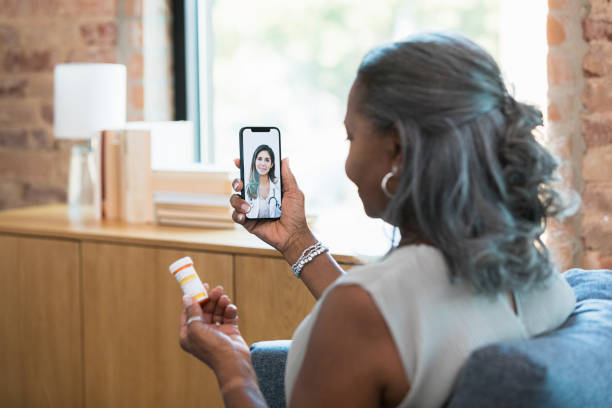
Telemedicine is a virtual approach that connects patients with clinicians by video or phone. In the telemedicine vs in person comparison, virtual care holds clear advantages in four areas.
- Access. Patients in rural counties and patients with mobility limits reach a clinician without a long drive.
- Speed to care. A same-week video slot often beats a three-week wait for an office visit.
- Continuity. Follow-up, medication checks, and results review translate well to a screen.
- Cost. A February 2026 analysis in JAMA Network Open found telemedicine episodes carried lower charges and fewer subsequent visits inside a 30-day window than in-person episodes.
Utilization data supports steady demand. FAIR Health reported telehealth at 5.51% of national medical claim lines in the first quarter of 2026, up from 5.01% in the prior quarter. Behavioral health drives much of that volume, at 52.1% of telehealth claims nationally.
What In Person Care Still Owns
Traditional visits keep advantages that virtual care cannot replicate. Any honest telemedicine vs in person assessment has to name them.
- Physical examination. Palpation, auscultation, gait assessment, and wound inspection need a clinician in the room.
- Procedures and diagnostics. Injections, biopsies, imaging, and point-of-care labs are site-based by definition.
- Emergencies. Chest pain, stroke symptoms, and respiratory distress require immediate in-person evaluation.
- Relationship building. First visits and difficult conversations often land better face to face.
- Test completion. A February 2026 JAMA Network Open study examined screening test ordering and completion across virtual and in-person annual visits, a reminder that preventive care loops can slip when nobody is in the building.
Study 1: Primary Care Treatment and Follow-Up
A Kaiser Permanente analysis published in Annals of Internal Medicine remains the strongest primary care comparison available. Researchers reviewed more than 1.5 million primary care visits across video, telephone, and office settings.
Three findings matter for scheduling decisions.
- Visit mix. Appointments split close to evenly between virtual and in-office care.
- Seven-day follow-up. Follow-up occurred after 1.3% of office visits, 6.2% of video visits, and 7.6% of telephone visits.
- Emergency department follow-up. Rates stayed low across all three: 1.6% office, 1.8% video, 2.1% telephone.
Read that carefully. Telemedicine required more follow-up contact, but it did not push patients toward emergency departments. For telemedicine in primary care, the practical lesson is to plan a follow-up touchpoint rather than assume one visit closes the loop.
Study 2: Equivalence in a Randomized Trial
Observational data invites confounding. A randomized trial removes much of it. A multisite trial published in JAMA enrolled 1,250 patients with advanced non-small cell lung cancer across 22 United States cancer centers. Patients received early palliative care either by secure video or in person.
At 24 weeks, quality of life scores were statistically equivalent between groups. Mood, coping, satisfaction, and health care utilization showed no significant differences.
That result carries weight. If video delivers equivalent outcomes in serious illness care, the telemedicine vs in person question in routine chronic disease management is largely settled on quality grounds.
Study 3: Patient Experience
An earlier comparison of patient experience across visit types found tele-video visits rated as well as or better than office visits on several measures. Reported strengths included clinician communication, care coordination, and willingness to recommend the clinician.
Telephone visits scored lower, particularly on interactions with office staff. Practices running phone-only virtual care should treat that gap as a fixable operational problem, not a limit of virtual care itself.
Where Remote Patient Monitoring Fits
Telemedicine and office visits are both episodic. They capture a moment. Chronic disease does not behave in moments.
Remote patient monitoring (RPM) closes that gap with FDA-cleared devices that transmit readings from the patient’s home between visits. In the telemedicine vs in person framing, remote patient monitoring is not a third competitor. It is the data layer underneath both.
Consider how that plays out clinically.
- Hypertension. Daily cuff readings show a trend that a single office reading cannot. Remote patient monitoring for hypertension lets a clinician titrate on evidence instead of one number.
- Diabetes. Glucose patterns across weeks identify which part of the day is failing.
- Heart failure. Daily weights flag fluid retention before a patient decompensates.
- Respiratory disease. Peak flow and oximetry readings catch decline early.
- Post-discharge. Monitoring during the first 30 days supports early intervention when risk is highest.
RPM also makes virtual visits substantially better. A video visit backed by 30 days of physiologic data is a different encounter than a video visit backed by patient recall.
What Changed in Medicare Reimbursement
Two policy shifts landed in 2026 and both affect how practices plan telemedicine vs in person schedules.
Telehealth Flexibilities Extended Through 2027
Medicare’s pandemic-era geographic and originating site flexibilities expired on January 31, 2026. Congress restored them days later. The Consolidated Appropriations Act, 2026 was signed on February 3, 2026 and extended those flexibilities through December 31, 2027.
The practical effect is that Medicare beneficiaries can continue receiving covered telehealth services at home, including in non-rural areas. Practices should still track the expiration date, because this is the fourth short-term extension in recent years.
New RPM Codes 99445 and 99470
CMS finalized two new remote monitoring codes in the 2026 Physician Fee Schedule, effective January 1, 2026.
- CPT 99445 covers device supply with daily recordings or programmed alert transmission for 2 to 15 days in a 30-day period. It removes the long-standing 16-day threshold that blocked billing for shorter monitoring periods. Reimbursement is comparable to 99454, roughly $47 to $52 per 30-day period depending on locality.
- CPT 99470 covers the first 10 minutes of remote physiologic monitoring treatment management, requiring at least one real-time interactive communication in the calendar month. It reimburses roughly $26.
One rule deserves emphasis. The new codes are not additive with their predecessors. Practices choose 99445 or 99454, and 99470 or 99457, for a given patient in a given period. Teams already billing CPT code 99453 should review documentation workflows before switching.
These changes matter clinically, not only financially. Shorter monitoring windows now qualify, which makes post-discharge and titration monitoring viable for patients who never needed a full 16 days of data.
A Practical Decision Framework
Use this as a starting triage rule rather than a policy.
Choose in person when:
- The presentation needs a physical exam or procedure
- Symptoms suggest an acute or unstable condition
- The patient is new and the diagnosis is unclear
- Diagnostics or vaccinations are due at the same visit
- The patient lacks a workable device or connection
Choose telemedicine when:
- The visit reviews results, adjusts medication, or checks progress
- Behavioral health is the primary need
- Travel is a genuine barrier
- The condition is stable and well characterized
- Objective data already exists from remote monitoring
Add remote patient monitoring when:
- The patient has a chronic condition requiring titration
- Readings between visits would change decisions
- The patient was recently discharged
- Office readings and home readings disagree
Most practices land on a blended model. Quarterly in-person visits, virtual check-ins between them, and continuous device data underneath both.
Frequently Asked Questions
1) Is telemedicine as effective as in person care?
For many conditions, yes. A randomized trial in advanced lung cancer found equivalent quality of life between video and in-person palliative care at 24 weeks. Effectiveness depends on the clinical question, not on the format alone.
2) What conditions should always be seen in person?
Anything requiring a physical exam, a procedure, imaging, or urgent evaluation. Chest pain, breathing difficulty, neurologic symptoms, significant injuries, and unexplained new findings belong in a clinic or emergency department.
3) Does Medicare still cover telehealth in 2026?
Yes. Geographic and originating site flexibilities lapsed briefly on January 31, 2026, then were restored by the Consolidated Appropriations Act, 2026 and extended through December 31, 2027.
4) How is remote patient monitoring different from telemedicine?
Telemedicine is a scheduled visit conducted remotely. Remote patient monitoring is continuous collection of physiologic data between visits. One is an encounter, the other is a data stream.
5) What are the new RPM CPT codes for 2026?
CPT 99445 covers device supply for 2 to 15 days of monitoring. CPT 99470 covers the first 10 minutes of treatment management with one interactive communication. Both took effect January 1, 2026 and neither is additive with its predecessor code.
6) Do telemedicine visits lead to more follow-up appointments?
Somewhat. Kaiser Permanente data showed seven-day follow-up after 6.2% of video visits and 7.6% of telephone visits, compared with 1.3% of office visits. Emergency department follow-up stayed low across all formats.
7) Are video visits better than phone visits?
Patient experience data favors video. Video visits rated higher on clinician communication and care coordination. Phone visits scored lower, especially on office staff interactions.
Understanding Telemedicine vs. In Person Care
The telemedicine vs in person question has a clearer answer in 2026 than it did three years ago. Randomized and observational evidence points the same direction. For stable conditions, follow-up, behavioral health, and chronic disease management, virtual care produces outcomes comparable to office visits, often at lower cost and with fewer downstream encounters. For physical examination, procedures, diagnostics, and acute presentations, in person care remains necessary and is not substitutable.
Medicare policy now supports a blended model through the end of 2027. The 2026 code changes go further by paying for shorter monitoring windows and shorter management time, which lowers the barrier to using remote patient monitoring alongside either visit type. The strongest programs stop treating these as competing options. They use in person visits for what hands and instruments do best, telemedicine for continuity and access, and remote monitoring to keep the data flowing between both.
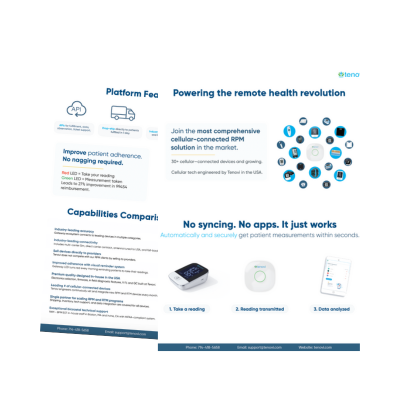
Tenovi provides chronic care, telehealth, and remote patient monitoring software and services companies with FDA-cleared RPM devices and customized integrations for real-time access to their patients’ health and billing data. Our cellular Tenovi Gateway connects devices automatically, with no apps or patient pairing required. Contact Tenovi today for a free demo and consultation.